Reading time: 7 min
Sporting performance is often presented as the result of rigorous training, good mental preparation and solid motivation, but an equally decisive factor remains largely underestimated: the young athlete's cultural and family background.
The family environment: the foundations of personality
The environment in which a child grows up shapes the way they understand effort, cope with stress, express their emotions and relate to authority. These often invisible influences guide their attitude on the pitch and the way they interpret success or failure.
From childhood, the way they are surrounded, encouraged or held back influences their relationship with effort, difficulty and authority. Understanding these foundations explains many behaviours observed later on the pitch.
Work from systemic clinical practice shows that a child's place in the family largely shapes their attitude. The eldest often adopts an exemplary role that can push them towards perfectionism (often given more responsibility, more assertive), while the second child often develops a conquering attitude to make their mark within the siblings. Some adopt a mediator role, learning very early to avoid conflict, which can later reduce their ability to assert themselves with a coach or teammates. The youngest in the family, for their part, has often been more protected or helped, which can reinforce a style more dependent on others or difficulty tolerating frustration (Duret, I., 2025).
The quality of attachment also plays a central role. A child raised in a stable climate tolerates mistakes better and bounces back more easily after failure. Conversely, an environment marked by instability, criticism or unpredictability heightens sensitivity to pressure and judgement. On the pitch, this can translate into holding back, a lack of initiative or over-control at key moments.
In our work, we often see that some apparently irrational reactions make complete sense once the athlete is placed back in their family context. Fear of disappointing, a need to be perfect, difficulty saying no, a tendency to take everything on themselves: so many dynamics that often have their roots in the first years of life.
In short, the family environment does not determine everything, but it sets the first relational and emotional patterns that will influence the way someone is an athlete. Understanding it allows more finely tuned support and better-adjusted expectations, instructions and support.
Recognising this cultural background is not a judgement; it is a way of shedding light on behaviours that are never random. Athletes always arrive with a history that continues to live within them.

Life events: when personal history shapes mental availability
Life events deeply affect the way a young athlete makes themselves available for training and competition. They shape the ability to concentrate, handle pressure and stay motivated while performing.
Research in developmental neuropsychology shows that a child exposed to major transitions such as a divorce, a move, parental conflict or bereavement builds specific emotional strategies to stay stable in an unstable environment (Schore, 2001; Siegel, 2012). These strategies, useful at one point, can later reappear in sport.
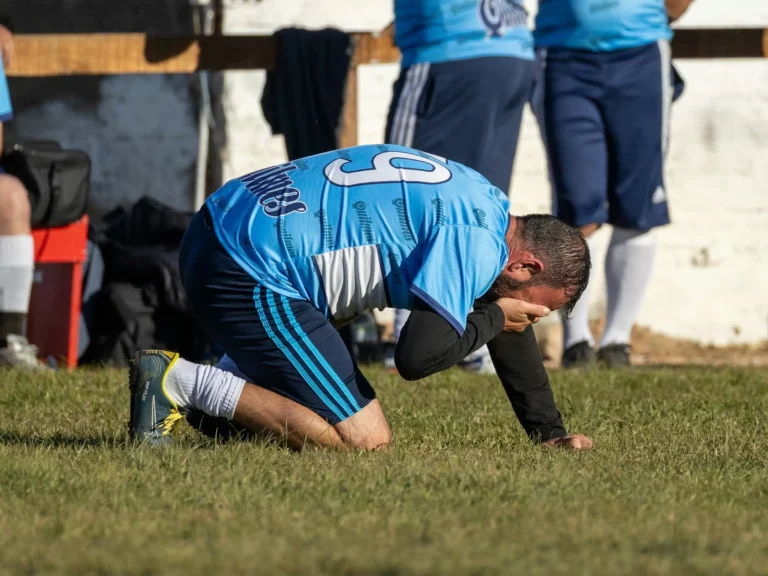
A young person facing family tensions may, for example, develop hypervigilance that pushes them to constantly analyse other people's reactions. On the pitch, this can show up as a fear of disappointing or difficulty taking risks, because a mistake activates the same alarm system as in their family environment. Other children will rather cut themselves off from their emotions to “hold it together” and appear very calm on the surface, but this inner distance can limit their connection to the game or the group (Fonagy et al., 2002).
The emotions linked to these life events also influence motivation. Research on stress adaptation in children shows that a young person who has experienced a major upheaval may swing between over-investment to prove they are coping and a drop in energy when the stress system tires (Compas et al., 2001). Sport becomes either a refuge or an extra source of pressure, depending on how supported the child feels.
Individualist and collectivist cultures: a logic that can influence performance
Cultures shape the way a young person perceives effort, success and their place in a group. The foundational work of Markus and Kitayama (1991) shows that identity is built differently depending on whether you grow up in an individualist or collectivist environment. These differences are subtle but decisive in a sporting context.
In individualist cultures, often found in Western Europe or North America, the emphasis is on autonomy, self-expression and visible success. These young people are more sensitive to external evaluation and may feel strong pressure around results. When offered a less valued collective role, some may see it as a devaluation or a lack of recognition. Sport then becomes a space where personal performance takes centre stage.
Conversely, in collectivist cultures, found in particular in Asia, Africa, the Middle East or some diasporas, priority is given to the group, respect and discretion. Young people from these environments often show strong loyalty to the team and reluctance to put themselves forward. Their more hierarchical relationship with authority may be misinterpreted by a coach used to encouraging individual initiative. As ethnopsychiatric work shows (Devereux, 2001; Moro, 2015), a behaviour only makes sense when placed back within its cultural norms: avoiding eye contact may be seen as a lack of motivation or nonchalance, when in some contexts it is a sign of respect.
Why is this approach essential in psychological support?
At AU MENTAL, understanding a young person's family and cultural history means giving meaning. A demanding parent is not necessarily putting on pressure: they may be passing on a model where effort is a proof of love. A withdrawn young person is not unmotivated: they may come from a culture where emotional expression is restrained. A child who is anxious after a divorce is not fragile: they are reorganising themselves psychologically.
Psychological work consists of:
- identifying the roots of behaviours,
- creating a suitable motivational climate,
- strengthening autonomy, competence and relatedness (Deci & Ryan),
- helping the child and the family stabilise the way they communicate.
A global view of the sporting environment
Ultimately, supporting an athlete means understanding that they never come alone: they arrive with their family, their culture, their language, their history and their trials, and it is by recognising these roots, visible and invisible, that we can really help them build a performance that is lasting, aligned and fully their own.
The essential conclusion is that sporting performance is never disconnected from personal life. Athletes do not leave their emotions in the dressing room. Understanding what a young person is going through means adjusting the way we support them, respecting their pace and creating a framework stable enough for them to turn their life events into strength.
With this article, we come to the end of our series on the athlete's environment: a journey that has taken us from the school-sport balance to the relationship with the coach, by way of the impact of social media and, today, the family and cultural roots that shape every young person. If this topic interests you, we strongly encourage you to browse the other articles in the series and the podcasts, which complement each other and offer a global, nuanced and essential view for understanding how an athlete develops, thrives… and performs.
References
- Bowlby, J. (1988). A secure base: Parent-child attachment and healthy human development. Basic Books.
- Compas, B. E., Connor-Smith, J. K., Saltzman, H., Thomsen, A. H., & Wadsworth, M. E. (2001). Coping with stress during childhood and adolescence. Psychological Bulletin, 127(1), 87–127.
- Cyrulnik, B. (2001). Les vilains petits canards. Odile Jacob.
- Deci, E. L., & Ryan, R. M. (2000). The “what” and “why” of goal pursuits. Psychological Inquiry, 11(4), 227–268.
- Devereux, G. (2001). Essais d’ethnopsychiatrie générale. Gallimard.
- Fonagy, P., Gergely, G., Jurist, E., & Target, M. (2002). Affect regulation, mentalization, and the development of the self. Other Press.
- Luthar, S. S. (2006). Resilience in development. In Handbook of child psychology (pp. 739–795).
- Markus, H. R., & Kitayama, S. (1991). Culture and the self. Psychological Review, 98(2), 224–253.
- Moro, M.-R. (2015). Nos enfants demain. Odile Jacob.
- Schore, A. N. (2001). Effects of early relational trauma. Infant Mental Health Journal, 22(1–2), 201–269.
- Siegel, D. J. (2012). The developing mind (2nd ed.). Guilford Press.
- Duret, I. (2025). Work in systemic and family clinical practice. La peur de transmettre. Éditions Odile Jacob.
Read next