Reading time: 8 min
In a world where digital interactions are an integral part of daily life, social media and social relationships have a profound influence on the construction of identity, motivation and self-confidence in athletes. For the youngest athletes, these environments can act as levers for personal development or, on the contrary, as sources of psychological vulnerability (Smith & Sanderson, 2015).
This article sets out to decode how social and digital relationships shape a sporting path, while identifying strategies to make them an ally rather than a risk.
The athlete's social environment: a key factor in development
Peers, whether friends, teammates or classmates, play a decisive role in sporting socialisation. Positive interactions strengthen the sense of belonging and intrinsic motivation, encouraging lasting commitment to the sport (Allen, 2003). On the other hand, social dynamics marked by internal competition, social comparison or fear of judgement can generate stress and lower confidence (Keegan et al., 2009) and ultimately affect performance. The quality of the social climate (support, recognition, cooperation) therefore directly influences the young athlete's psychological satisfaction and resilience in the face of the challenges of high-level sport (Jowett & Lavallee, 2007).
If this topic interests you, a full article has been published on the relationship between the coach, the athlete and the parents, and how this trio influences the young athlete's motivation, confidence and well-being. It explores everyone's roles, common sources of tension and the keys to establishing healthy communication around the athlete. To understand how this relational balance directly affects the young person's progress and fulfilment, you can read the article here.
Social media: an amplified mirror of performance
Social networks such as Instagram, Twitter, TikTok or Snapchat have become spaces of visibility and expression for young athletes. They allow them to share successes, find inspiring role models and maintain a public sporting identity (López-Fernández et al., 2022). However, this exposure comes with psychological risks: constant comparison with other athletes, attention to body image and the search for social validation can weaken self-esteem (Perloff, 2014).
Many studies in social psychology show that upward comparison, i.e. comparing yourself to someone who performs better, can be motivating when it is seen as a source of inspiration, but demotivating when it generates a feeling of inferiority (Festinger, 1954; Fardouly & Vartanian, 2016). More recent models of social comparison, notably the identification-contrast model (Buunk & Ybema, 1997), show that the effect of these comparisons depends on how much you identify with the target: an upward comparison is only beneficial if the individual can identify with the better-performing person. So when the target is seen as similar or accessible, the comparison encourages assimilation, strengthens inspiration and can support self-efficacy. Conversely, when the target is seen as too distant or unattainable, the comparison produces a contrast effect and can affect confidence.
To sum up, upward comparison is only truly motivating if the individual perceives some similarity or closeness with the reference person, allowing them to see an attainable model rather than a threat to their sense of competence.

When social media scatters our attention
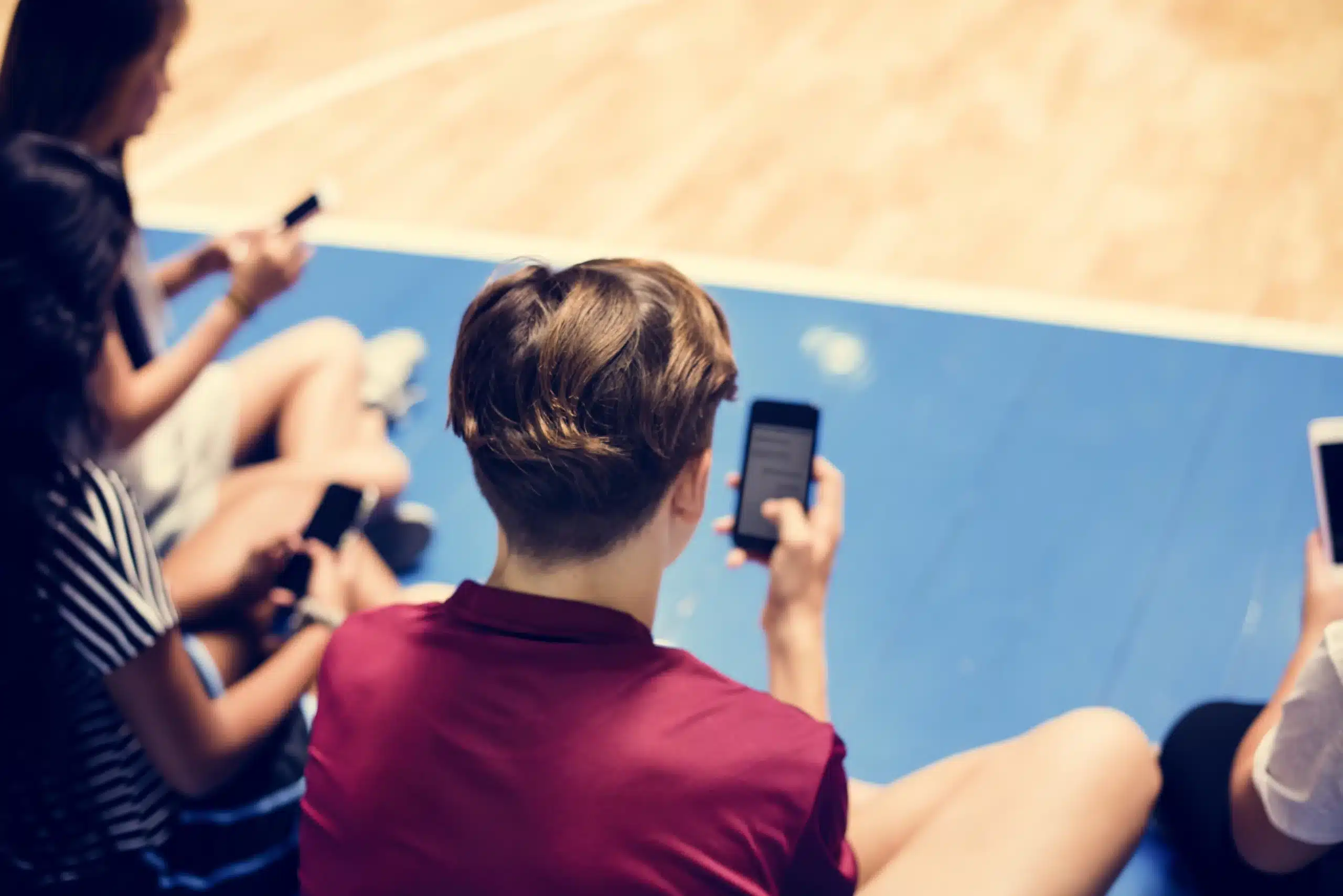
Social media also encourages distraction and cognitive overload, because it constantly demands our attention through notifications, very short videos, changing content and instant rewards. This constant stimulation fragments attention and can lead to what some researchers call “attention fragmentation”, a scattering of attention that, over the long term, mimics some symptoms of ADD without constituting a neurodevelopmental disorder. When attention is constantly interrupted, the brain gets used to working in “fragmented vigilance” mode, which makes it harder to concentrate on long, complex or monotonous tasks (Wegera et al., 2023).
Attention fragmentation creates a form of unchosen multitasking: the person jumps from one stimulus to the next without real control (scrolling), which increases cognitive load. In the long term, this can lead to difficulty maintaining attention in class, at work or in sport, careless mistakes, high impatience and difficulty tolerating periods of silence or boredom. In cognitive psychology, we know that rapidly switching between tasks places heavy demands on executive resources and tires attentional circuits (Wegera et al., 2023).
When everything is trying to capture our attention, our ability to keep it becomes our greatest strength.
Consuming images of idealised performance and constant comparisons with unattainable role models also increase FOMO (fear of missing out), which disrupts the ability to switch off mentally. The study by Przybylski et al. (2013) showed that FOMO increases distractibility, impulsivity and the need to check one's phone, reinforcing the dependence loop. The more a person fears missing a notification, a message or a social event, the more likely they are to switch activities quickly, at the expense of sustained attention.
The brain is not made for hundreds of micro-stimulations per hour: it ends up wearing itself out silently.
The brain then gets used to very fast, continuous reinforcement and finds it harder and harder to engage in activities with delayed gratification, such as studying, reading or simply thinking without distraction. This constant stimulation can reduce tolerance of cognitive effort, which resembles one of the common symptoms described in attention disorders (difficulty getting going, effort feels costly).
The impact can also be seen on sleep. Less sleep = less attentional capacity the next day. This further increases concentration difficulties, can affect performance and can cause injuries.
Stress, overload and mental fatigue: the impact of social media
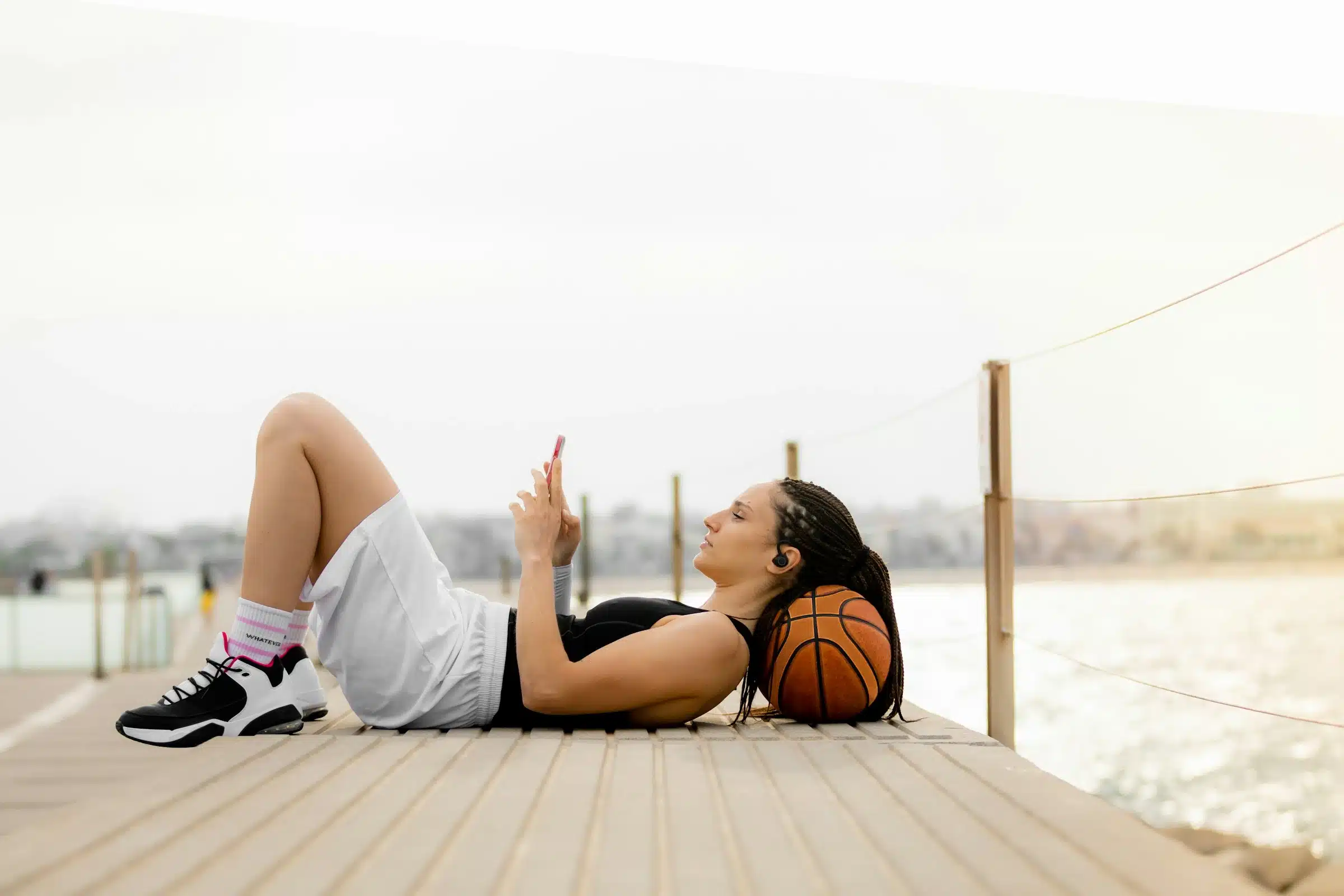
Intensive use of social media can become a real source of chronic stress, because we stay constantly connected, exposed to social expectations and to “doomscrolling” (scrolling endlessly through negative, anxiety-inducing or stressful news). This can lead to a kind of burnout, a form of exhaustion and mental fatigue linked to being “always online”. People with good emotional self-regulation or who practise mindfulness cope better (Frontiers, 2025). Finally, this prolonged stress disrupts hormonal balance (cortisol) and tires the body, which further weakens mental health.
Towards conscious, constructive use of social media
Rather than demonising social media, it is essential to learn to develop self-regulation skills. This is an integral part of the athlete's mental discipline. In practice, it means learning to:
- Tell reality apart from staging: understand that the images posted only reflect an idealised part of sporting life.
- Manage exposure time: limit time online, especially before competitions or during rest periods. Then, filtering what you watch is protecting what you feel: every piece of content you let into your mind influences your energy, your mood and your mental stability.
- Cultivate gratitude and self-compassion: focus on your personal progress rather than on comparison, especially if you already tend to put yourself down or have low self-esteem.
- Value positive interactions: encourage using social media to build connections, feel supported and share constructive content. This positive climate nurtures the sense of belonging, which is essential for motivation. Conversely, hostile or discriminatory experiences, such as racism, can damage this sense of inclusion and lead to lower motivation, lower performance or social withdrawal.
Finding the balance
Coaches and parents can play an active role in this digital education, by talking openly about the content consumed and encouraging critical thinking rather than judgement (Van Dellen & Hoyle, 2008).
At AU MENTAL, we are aware that social media and the social environment now shape an essential part of an athlete's psychology. They can be sources of support and motivation, but also vehicles for comparison, distraction and fragility.
The challenge is therefore not to exclude these influences, but to understand and regulate them. Helping young athletes build a healthy relationship with their social and digital environment means helping them strengthen their confidence, autonomy and psychological well-being: essential pillars of lasting performance.
References references
Allen, J. B. (2003). Social motivation in youth sport. Journal of Sport & Exercise Psychology, 25(4), 551–567.
Buunk, B. P., & Ybema, J. F. (1997). Social comparisons and occupational stress: The identification‐contrast model. European Journal of Social Psychology, 27(3), 393–407.
Fardouly, J., & Vartanian, L. R. (2016). Social media and body image concerns: Current research and future directions. Current Opinion in Psychology, 9, 1–5. https://doi.org/10.1016/j.copsyc.2015.09.005
Festinger, L. (1954). A theory of social comparison processes. Human Relations, 7(2), 117–140. https://doi.org/10.1177/001872675400700202
Frontiers. (2025). Social media excessive use and learning burnout among college students: A stressor–strain–outcome model. Frontiers in Psychology. https://doi.org/10.3389/fpsyg.2025.xxxxx
Jowett, S., & Lavallee, D. (2007). Social psychology in sport. Human Kinetics.
Keegan, R. J., Harwood, C. G., Spray, C. M., & Lavallee, D. E. (2009). A qualitative investigation of the motivational climate in elite sport. Psychology of Sport and Exercise, 10(4), 361–372. https://doi.org/10.1016/j.psychsport.2009.01.005
López-Fernández, I., Sánchez, M. Á., & González, J. (2022). Athletes on social media: Between performance and identity. International Journal of Sport Communication, 15(2), 183–198. https://doi.org/10.1123/ijsc.2021-0023
Perloff, R. M. (2014). Social media effects on young women’s body image concerns: Theoretical perspectives and an agenda for research. Sex Roles, 71(11–12), 363–377. https://doi.org/10.1007/s11199-014-0384-6
Przybylski, A. K., Murayama, K., DeHaan, C. R., & Gladwell, V. (2013). Motivational, emotional, and behavioral correlates of fear of missing out. Computers in Human Behavior, 29(4), 1841–1848. https://doi.org/10.1016/j.chb.2013.02.014
Smith, L. R., & Sanderson, J. (2015). I’m going to Instagram it! An analysis of athlete self-presentation on Instagram. Journal of Broadcasting & Electronic Media, 59(2), 342–358. https://doi.org/10.1080/08838151.2015.1029125
Van Dellen, M. R., & Hoyle, R. H. (2008). Regulatory accessibility and social comparison: Knowing and using information about the self. Personality and Social Psychology Bulletin, 34(3), 423–433. https://doi.org/10.1177/0146167207311202
Wegera, A., et al. (2023). Social media use and everyday cognitive failure: Investigating the fear of missing out and social networks use disorder relationship. BMC Psychiatry, 23, 872. https://doi.org/10.1186/s12888-023-05371-x
Read next