The Champions Journal

Category: Journal

Bouncing back without starting from scratch
Journal

Bouncing back without starting from scratch

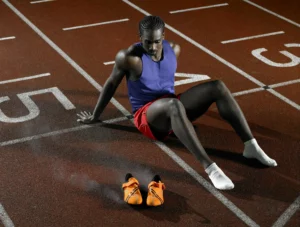
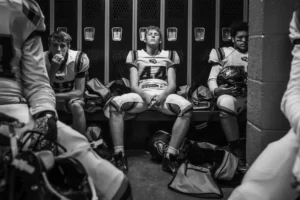
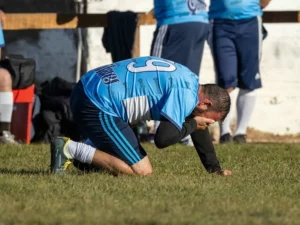
Bench, silence, incomprehension: what sidelined athletes go through often has nothing to do with their real level. Here is what the scientific literature and journeys like Benjamin Mukulu's reveal about the real reasons for the fall and the comeback.

Who is your favourite player?
Journal

Who is your favourite player?

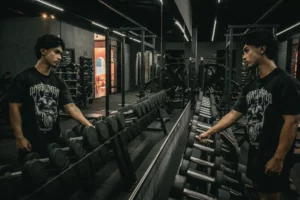
It is a question we very often ask our athletes: “Who is your favourite player?” And that question means much more than you might think once you understand how self-efficacy works according to Albert Bandura. Because a role model is not just someone you admire. Sometimes they are the first living proof that what you dream of could also become possible for you.

Two realities that can break a career: injuries and parents 
Journal

Two realities that can break a career: injuries and parents 

A career is not always broken by a lack of talent. Among young players, poorly managed injuries and parental pressure can undermine confidence, identity and the desire to keep going. This article explores how to protect the young athlete's body, mind and environment.

“I’m afraid of losing my place”: what an injured young athlete goes through
Journal

“I’m afraid of losing my place”: what an injured young athlete goes through

When a young athlete gets injured, it's not just their body that stops, their whole balance wobbles. Very quickly, the injury can trigger a central fear: losing their place. Afraid of losing their status, they put pressure on themselves to come back as fast as possible, stop listening to their body… and unfortunately increase the risk of re-injury. As a parent, you often find yourself juggling support and worry. In this article, we break down what an injury triggers mentally in a young person, what you go through in the background, and how to support them in the right way.

How should I react when my child is not selected? 
Journal

How should I react when my child is not selected? 

When your child isn't picked, frustration is normal. The danger is the immediate interpretation of total injustice or a judgement on their worth. Between the two there is a third way: turning non-selection into a moment of growth, without damaging the relationship with the club or coach, or your child's self-esteem.

When “I want to succeed” becomes “I have to please you”
Journal

When “I want to succeed” becomes “I have to please you”

As the parent of a young athlete, you may already have thought: “They are motivated, they work hard, they want to succeed.” And that's true. But there is a more subtle and often invisible reality: a young person can seem very motivated… while playing under pressure. A quieter pressure: the need to make you proud. And when that shift sets in, enjoyment drops, anxiety rises and motivation becomes fragile. Not necessarily today. But over time.

Sports parent: a coach in spite of themselves
Journal

Sports parent: a coach in spite of themselves

A parent can become a “coach in spite of themselves” without realising it. When support turns into pressure, the athlete's motivation and confidence can tip over.

Sport and rest: a paradox to master
Journal

Sport and rest: a paradox to master

In high-level sport, it often seems intuitive that more training means more performance. Yet sport shows a paradoxical reality: recovery, breaks and managing rest are essential parts of progress, not obstacles. This article explains why stopping is an integral part of performance, what happens when you don't rest, and how to approach periods of withdrawal strategically to come back stronger and perform better.

The illusion of emotions 
Journal

The illusion of emotions 

We always think we know what we feel, yet there is often a gap between the body's signals and the way we interpret them. This gap explains why two athletes in the same situation can experience completely different emotions. Their emotional constructions are not based on the same learning or the same filters. Understanding this mechanism allows athletes to decode their sensations, redirect their emotional state and use their physiological arousal as a real driver of performance.

The illusion of “everything is fine”
Journal

The illusion of “everything is fine”

In high-level sport, we celebrate strength, control and resilience. But behind this image, a much more complex reality persists: athletes who learn to keep their vulnerabilities quiet to protect their place, their contracts and their reputation. Many seem perfectly fine… while inside, tension, doubt and exhaustion are building up.

Discovery session · 45 minutes · free

Your summit starts with a conversation.

A free 45-minute first conversation to understand your situation and see how we can support you.

Free discovery session45 minutes, no commitmentBook