Reading time: 7 min
In sport, we often hear that self-confidence is “the key”. We value the athlete who is self-assured, solid and calm, able to enter competition with certainty and determination. But reality is more nuanced: confidence is a paradoxical mental resource.
- Too low, it paralyses. Too high, it makes you fragile. Well calibrated, it propels you. -
BBetween confidence, ego, doubt and resilience, champions do not become champions because they believe blindly in themselves, but because they learn to master this paradox and find their balance.
The illusion of perfect confidence
Bandura's models (self-efficacy), Vealey's (sport confidence) and Martens' work on performance anxiety all point to the same reality: it is not the quantity of confidence that predicts performance, but its quality.
Well-adjusted confidence (neither too low nor too high) improves anxiety management, makes it easier to focus on what really matters, speeds up adaptation during play and supports optimal physical mobilisation. In other words, it creates the conditions needed to perform without needlessly overloading the emotional system.
But when this confidence tips into overconfidence, cognitive mechanisms change radically. The athlete analyses what is happening around them less carefully, underestimates risks, neglects technical details that are normally automatic and develops illusions of control. They believe they can “feel” instead of assessing. They decide faster, but often less well (Vealey, R. S., 1986; Bandura, A., 1997; Cleary, T. J., & Zimmerman, B. J., 2001).
Research shows that:
- With too little confidence, the athlete doubts, tenses up and hesitates.
- With too much confidence, they relax, ignore weak signals and think they are immune to setbacks.
- In between lies the optimal zone, where the athlete feels capable without believing they are untouchable, focused without being anxious, vigilant without being suspicious. It is in this mental space that performance is most stable and lasting.
“I've missed more than 9,000 shots in my career. I've lost almost 300 games. 26 times I've been trusted to take the game-winning shot and missed. I've failed over and over again in my life. And that is why I succeed.” Michael Jordan
Let us take a concrete example, typical of what we see:
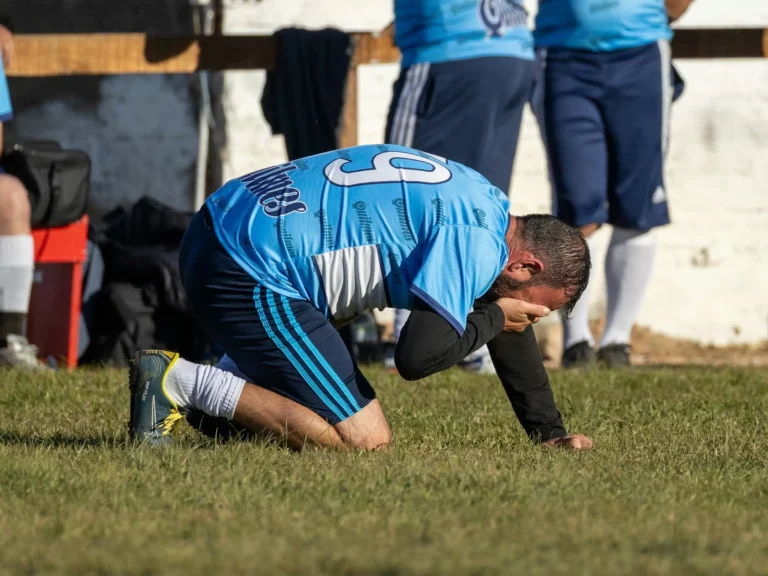
Lucas, 17, a football striker, is on an excellent run: six goals in four matches. Very quickly, what he says changes: “I'm on fire, I'm going to score again.” The coach notices that he warms up less conscientiously, skips some technical drills and starts forcing difficult actions.
In the next match, Lucas tries impossible shots, neglects his off-the-ball runs and ignores a defender closing him down. The result: a below-par performance, frustration and incomprehension. Yet nothing had changed… He hadn't lost his skills: he had lost his vigilance. What allowed him to score, i.e. clarity, precision and adjustment, dissolved into the belief that he “could do anything”. This case perfectly illustrates the confidence paradox: excessive confidence is dangerous.
To help Lucas get back to his level, we had to go back to basics: reconnecting with technical cues, analysing opponents' runs, refining mental preparation. In other words: working on the ego to get back to high standards. That is precisely the heart of sport psychology: helping the athlete stay in their optimal zone, the space where confidence fuels action without blinding it.
The sporting ego
Overconfidence is not just an exaggerated belief: it directly affects the athlete's ego, the image the athlete has of themselves and their worth.
The ego is not negative in itself. It can even become a tool of power: assertiveness, boldness, fighting spirit… However, when it takes up too much space, the ego creates distortions that undermine performance. Some champions, such as Bolt, Ibrahimović and McGregor, use it as a psychological weapon. These champions took the time to get to know themselves perfectly. They also understood an essential rule: the ego must be mastered, never left on autopilot (Roberts et al., 2007).
1. Reduced vigilance
The athlete starts to believe they are “above” the danger or the challenge. They assess the situation less carefully and pay less attention to weak signals. This relaxation isn't deliberate: it stems from the illusion that they are “naturally capable”.
2. Under-preparation
Carried by past successes, the athlete relies more on talent than on high standards. Precision training becomes secondary, and performance relies more and more on instinct, until the moment instinct is no longer enough.
3. Illusion of control
The athlete is convinced they can “handle everything” without real adaptation. They no longer adjust their strategy, overestimate their ability to improvise and minimise difficulties. As a result, after a run of successes, the brain reinforces the belief “I can do it no matter what”. That is useful… until reality no longer follows.
This system becomes explosive when something unexpected happens. Because the overconfident athlete is no longer used to doubting, the fall is brutal: loss of bearings, incomprehension, rigidity, even panic.
This is where the paradox appears most strongly: the one who seemed indestructible is sometimes the most vulnerable. Talent does not disappear, but an unregulated ego prevents adjustment, and that is when performance collapses.
“One important key to success is self-confidence. An important key to self-confidence is preparation.” Arthur Ashe
Flexible confidence: between identity, vulnerability and the intelligence of doubt
One of the most counter-intuitive aspects of the confidence paradox is this: the more extreme an athlete's confidence becomes, the more vulnerable they become.
This vulnerability does not come from a lack of skill, but from the identity dimension that excessive confidence takes on. When an athlete starts to define themselves by their superiority (“I'm the best”, “I never miss”), confidence is no longer a mental state: it becomes a pillar of their identity.
But sporting reality is not stable. It fluctuates constantly: injuries, technical errors, opponents stronger than expected, fatigue, changes in form, being left out… So when reality contradicts the image the athlete has of themselves, the psychological fall is brutal. Research on “choking” (Baumeister, 1984) shows that the stronger the ego, the more violent the collapse can be.
Conversely, athletes who naturally integrate a certain level of doubt develop better emotional resilience. Doubt, in its constructive form, does not weaken: it sharpens clarity. It encourages technical vigilance, tactical adjustment, openness to feedback and the prevention of complacency (Cleary & Zimmerman, 2001).
It protects against the excess confidence that leads to under-performance and supports steadier progress and the identification of one's limits, because it rests on a fine knowledge of oneself rather than an idealised image.
In other words, doubt is not the opposite of confidence: it is its regulator. Confidence pushes you to act; doubt pushes you to think. Together, they produce the rare clarity that allows the most skilled athletes to make the right decisions at the right time.
In conclusion, lasting performance rests neither on absolute confidence nor on generalised doubt. It is born in that subtle space where the athlete believes in themselves while remaining humble, attentive and adaptable. At AU MENTAL, we help athletes develop this supple, intelligent confidence: robust enough to perform, flexible enough to learn, so they can turn their potential into lasting performance.
References
- Bandura, A. (1997). Self-efficacy: The exercise of control. New York, NY: Freeman.
- Baumeister, R. F. (1984). Choking under pressure: Self-consciousness and paradoxical effects of incentives on skillful performance. Journal of Personality and Social Psychology, 46(3), 610–620.
- Cleary, T. J., & Zimmerman, B. J. (2001). Self-regulation differences during athletic practice by experts, non-experts, and novices. Journal of Applied Sport Psychology, 13(2), 185–206.
- Martens, R., Vealey, R. S., & Burton, D. (1990). Competitive anxiety in sport. Champaign, IL: Human Kinetics.
- Roberts, G. C., Treasure, D. C., & Conroy, D. E. (2007). Understanding the dynamics of motivation in sport and physical activity: An achievement goal interpretation. In G. Tenenbaum & R. C. Eklund (Eds.), Handbook of sport psychology (3rd ed., pp. 3–30). Hoboken, NJ: Wiley.
- Vealey, R. S. (1986). Conceptualization of sport-confidence and competitive orientation: Preliminary investigation and instrument development. Journal of Sport Psychology, 8(3), 221–246.
Read next