Reading time: 9 min
What the scientific literature and real careers teach us about the real reasons why an athlete collapses, and about what sometimes keeps them going.
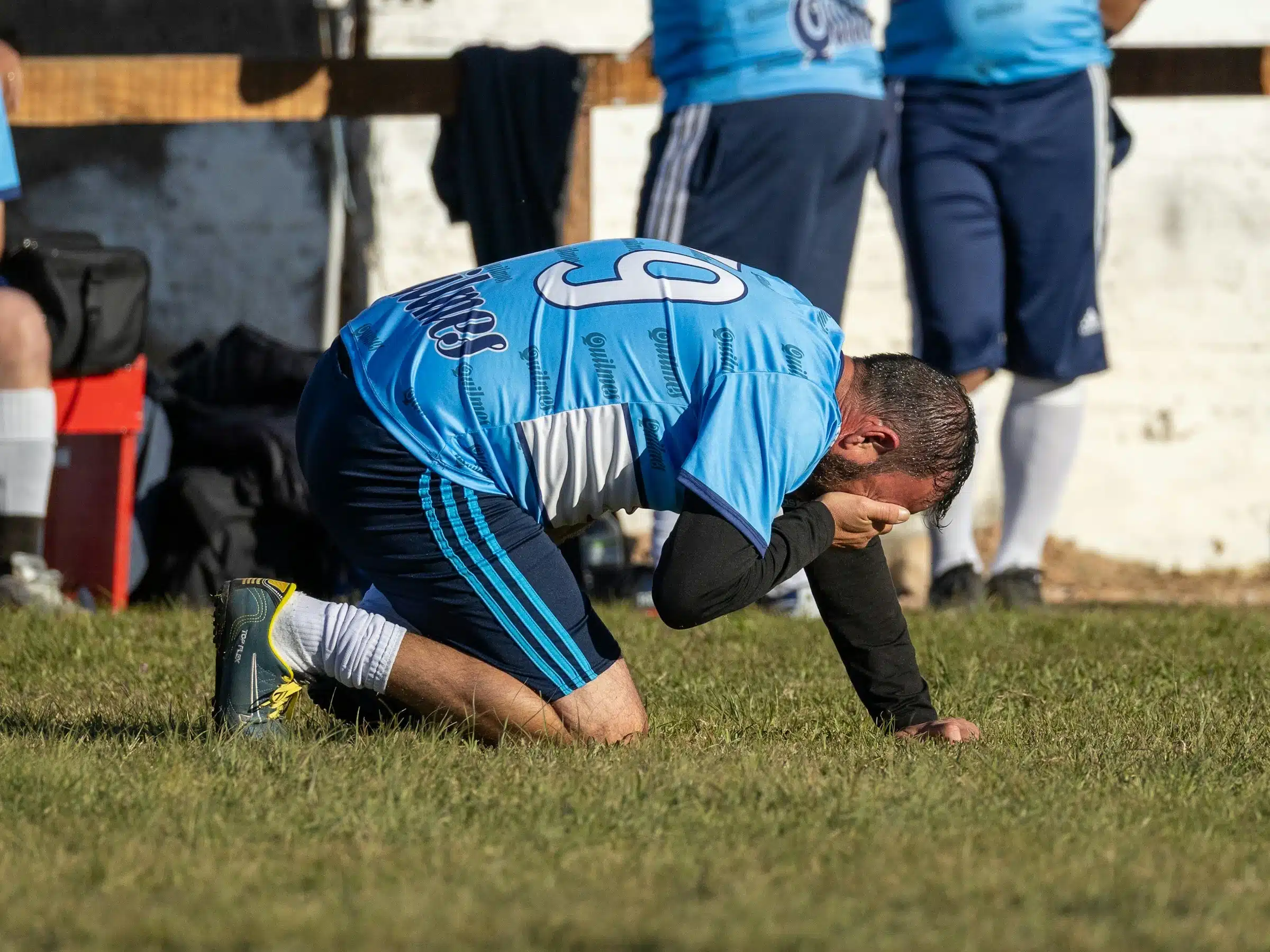
There is a scene that comes up in almost every sporting career, and it never makes the headlines. A player has their place. They deserve it, they have earned it match after match without letting up. Then one day, without warning, someone else arrives in the same position. The manager changes system. The coach “wants to try something else”. The player stays on the bench, one week, then two, then a whole season. Nobody really explains why. They keep training, keep up appearances, but something crumbles silently: confidence, the feeling of still belonging to the team, sometimes even the certainty of still being the player they thought they were.
That is the moment we want to talk about here. Not the spectacular injury or the broken contract, but this quieter erosion, the kind that affects an athlete at one point or another in their career and which, depending on how it is navigated, can either help them grow or make them give up.
When the place you thought was yours slips away
A study published in 2025 in PLOS One looked precisely at this experience, interviewing sixteen Turkish professional footballers, all internationals, who had gone through a long period out of the starting eleven. The results show that the players attribute being left out first to tactical choices or the coach's personal preferences, far more than to any real drop in their level of play. In other words: they don't understand why, and that lack of understanding weighs more heavily than being left out itself.
What these players describe is strikingly accurate. The feeling of no longer being part of the team, the gradual loss of confidence, identity confusion of a player who no longer recognises themselves in their own role. Some say they kept training flat out, convinced the situation was temporary, until the weeks piled up and hope turned into fatigue, then into tension that reached their family life. One of the players interviewed even ended up seeing a sport psychologist to cope. The study also observes a snowball effect: the less athletes understand why they are left out, the less engaged they become in training, which in turn pushes the possibility of returning to the squad even further away.
This is exactly the mechanism many young athletes experience on a smaller scale: the place lost to a newcomer, playing time melting away, the call-up that no longer comes, and that feeling of starting over the following season at a smaller club, with the sense of having to prove everything again from scratch.

What science says about why some fall back
Sport psychology, through the attribution theory developed by Bernard Weiner, offers an interesting key. Faced with a failure or setback, everyone tells themselves a story about its cause: is it down to me or to something else, will it last or pass, do I have any control over it or not. An athlete who interprets being left out as an arbitrary, lasting decision beyond their control is precisely the one most at risk of sliding into what researchers call learned helplessness, the state where you even stop trying, because you have come to believe that nothing you do has any effect on what happens to you.
That is where much of the damage happens. Not in the event itself, the injury, the substitute who takes their place, the club that doesn't keep them on. But in the meaning the athlete gives it, alone, often without anyone taking the time to help them put it differently.
The body tells a parallel story. Research on return to play after injury shows that physical confidence generally takes longer to rebuild than the tissues themselves, and that athletes who went through the longest layoff are also those with the lowest confidence scores when they return. The body can be ready long before the mind is, and vice versa: a physically recovered player can remain held back by the fear of getting injured again, or by doubts about still being good enough.
What sets apart those who come back
There is, however, a body of research that has looked at the other side of the story: athletes who go through adversity and come out of it, not unscathed, but stronger. In a study that has become a reference in the field, David Fletcher and Mustafa Sarkar interviewed twelve Olympic champions about what kept them going when everything seemed to be falling apart: repeated poor performances, injuries, changes of coach, media pressure. What emerges from their accounts is not an absence of doubt, but a set of resources found in almost all of them: motivation rooted well beyond the immediate result, confidence they had learned to rebuild themselves rather than waiting for it to return, a social circle they could lean on without shame, and the ability to keep their focus on what still depended on them, even when everything else was out of their hands.
It is this last point that changes everything in practice. A player put on the bench does not control the coach's decision. But they do control their state in training, the quality of their recovery, the way they talk to themselves in their head during those weeks. Refocusing effort on that area, however frustrating, is precisely what avoids the spiral described above, where loss of motivation feeds a drop in level, which in turn feeds the distance.
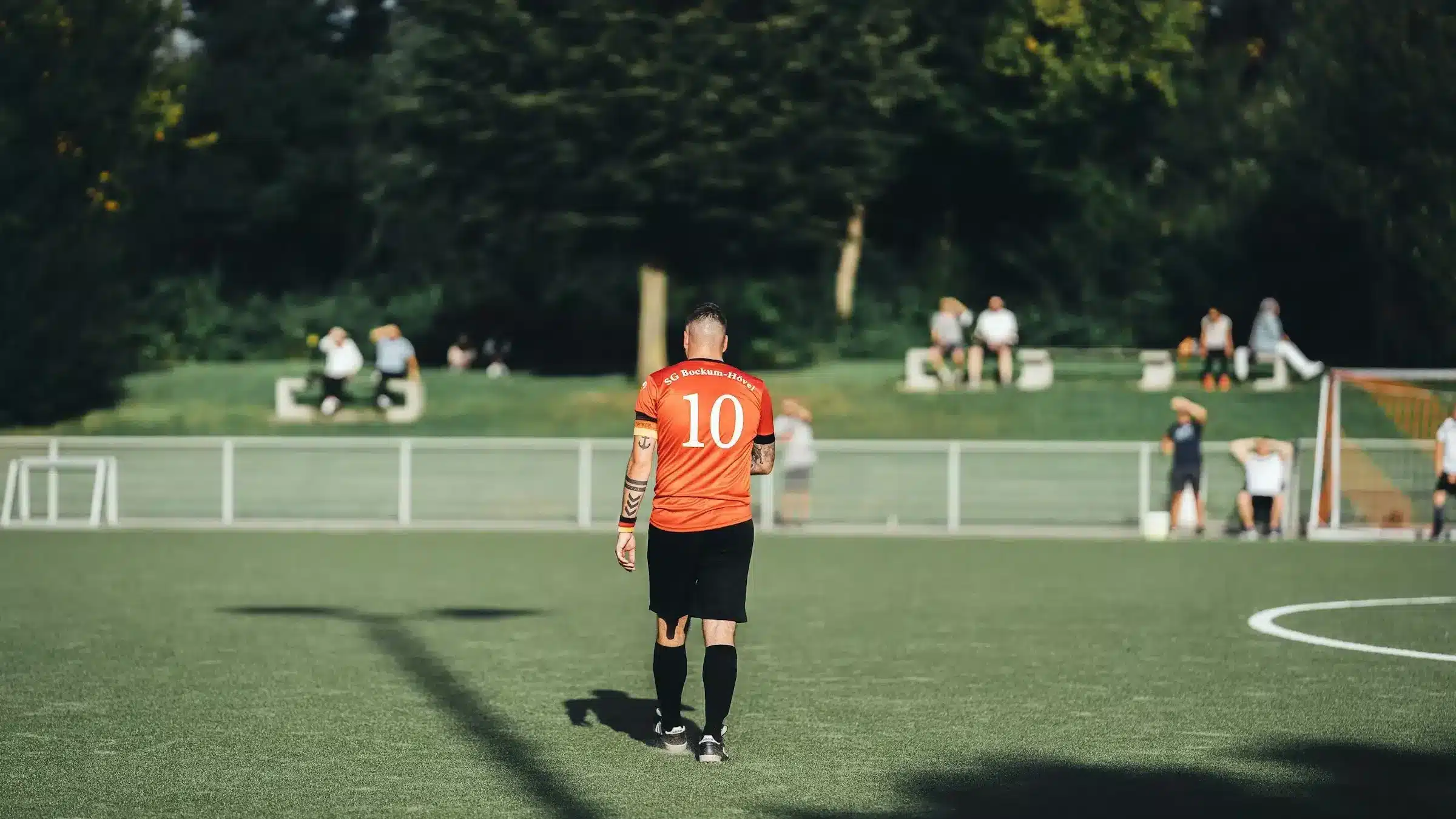
Benjamin Mokulu's journey: having to rebuild several times
Benjamin Mokulu's journey illustrates these changes of trajectory particularly well. A professional career, several leagues, transfers, different environments, then a ruptured Achilles tendon that kept him off the pitch for a long time. On top of a major injury come all the consequences that go with it: the squad carries on without you, the club moves on, another player may take your place, and the body that seemed reliable until then suddenly becomes something you have to learn to listen to again.
Benjamin Mokulu has also gone through other kinds of rupture: changes of club, a suspension, outside judgement and episodes of racism. Above all, his journey is a reminder that an athlete may have to start over several times in a single career. And each time, the trap is the same: wanting to get back as quickly as possible to the version of yourself that existed before.
Four supports so you don't let being left out define you
1. Name what is happening, without minimising or dramatising it. Telling yourself “I'm being left out and I don't understand why” is healthier than brooding in silence or acting as if nothing were wrong. Naming it is already starting to regain some control over the situation. From there, we help the athlete take responsibility and master what depends on them, e.g. asking the coach what they can improve and working on it (so as to leave the coach no reason to keep them on the bench).
2. Separate your worth from your playing time. The number of minutes on the pitch is not a measure of an athlete's worth. It is a decision made in the moment by someone else, often for reasons that have nothing to do with the player's real level.
3. Refocus effort on what remains under your control. Intensity in training, quality of sleep, the way you talk to yourself: these are the only levers that depend on nobody else, and they are what prepare the comeback when the opportunity arises. And make the most of that opportunity (even if it is only a few minutes of play, they must be your best, so you can finish proud of your performance despite everything).
4. Don't carry it alone. Athletes who get through these periods without collapsing are almost always those who were able to talk about it to someone close, a teammate or a mental coach before frustration turned into isolation.
The real starting line
Winning back your place, or finding a new one elsewhere, is not decided when the opportunity finally comes back. It is decided before, in the attitude, the behaviour, the way the athlete went through the weeks when nobody was watching: the work done in the shadows. Starting again at a small club, with one less call-up, a place called into question, is not going backwards: it is often the necessary step to come back stronger than before, with a self-understanding that uninterrupted success would never have given.
At Au Mentalthis rebuilding work is done in depth. As psychologists, we help athletes put words to what they are going through, understand the stages of their career, reframe what they are experiencing and find solid reference points to move forward.
If you are going through a period of doubt, injury, loss of playing time or a change of trajectory, you can book an appointment with us to talk about it. The first appointment is free.
And to go further, also check out our episode Inside with Benjamin Mokulu, in which he looks back on his career, his setbacks and how he rebuilt himself. Feel free to also read his book “Mai arrendersi” (Never give up) to understand what he went through in his career.

Bibliography
- Ulas, M., Adilogullari, İ., & Şenel, E. (2025). Qualitative analysis of elite football players’ causal attribution to not playing: A perspective of attribution theory. PLOS One, 20(6), e0325174.
- Fletcher, D., & Sarkar, M. (2012). A grounded theory of psychological resilience in Olympic champions. Psychology of Sport and Exercise, 13(5), 669–678.
- Weiner, B. (1985). An attributional theory of achievement motivation and emotion. Psychological Review, 92(4), 548–573.
- Maier, S. F., & Seligman, M. E. (1976). Learned helplessness: theory and evidence. Journal of Experimental Psychology, 105(1), 3–46.
- Podlog, L., et al. Literature on psychological readiness to return to play after injury (I-PRRS, confidence and fear of movement).
Read next