Reading time: 9 min
When your child isn't picked, frustration is normal. The danger is the immediate interpretation of total injustice or a judgement on their worth. Between the two there is a third way: turning non-selection into a moment of growth, without damaging the relationship with the club or coach, or your child's self-esteem.
Case analysis
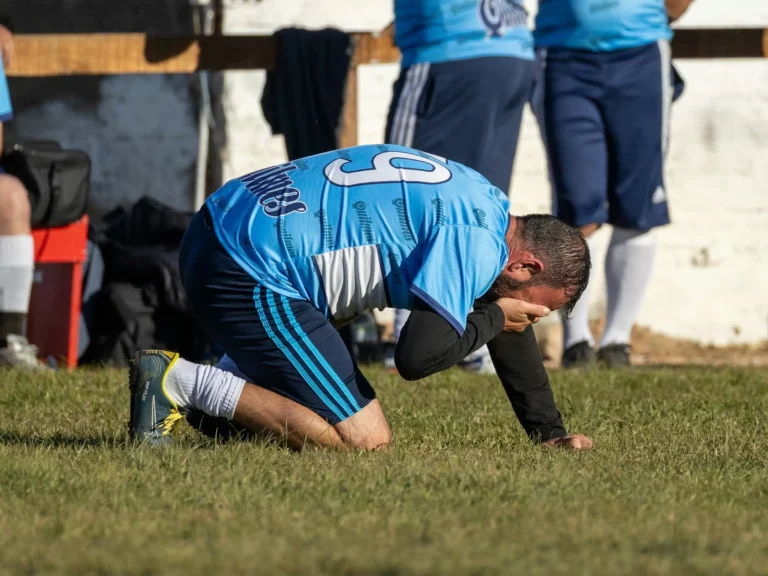
You get the message from the club at the end of the day. A list, an email, sometimes just one sentence. You open it, you read… and you realise their name isn't there. Your stomach tightens at once, not just because they won't play, but because you know what it means to them. For weeks you have watched them try, hang in there, make an effort, be more serious in training, talk about this tournament as an important moment. In their head it isn't just a match or a tournament: it's the bus with their friends, the atmosphere, the team they dream of facing, a country they love, an event that makes them feel they are moving towards their dream of turning pro.
And you find yourself with a difficult role: breaking the news. You already know it's going to hurt. You feel mixed, sometimes contradictory emotions rising: the urge to protect, to fix, to understand, sometimes even anger or a sense of injustice. You are afraid of seeing their face change, afraid they will feel useless, afraid they will shut down, lose confidence and tell themselves that all their efforts were for nothing. At the same time, you know that if you get carried away and go to war with the coach or the club, you risk passing on something else: that the world is against them, that the solution will always come from outside, or that the club is an enemy… when what they wanted above all was to be chosen and to feel they belong.
So now, the real question I'm asking you is: how do you react, first of all, and how are you going to tell your child?
*This case is presented for illustration. It is a fictional situation, built from elements of several situations, and does not reflect any identifiable person or family.
Non-selection affects more than football
What is happening inside you, and it's normal, is a mix of clashing reflexes. On the one hand, you want to protect: soften the blow, find the right words, stop them from falling apart, stop them from thinking everything is collapsing. In the same second, you also have the reflex to “fix it”: write to the coach, understand, look for an explanation, sometimes even make demands, because you feel that if you do nothing, you are abandoning them. Then guilt creeps in: “How am I going to tell them? Am I going to say one thing too many? Am I going to hurt them even more?”. You feel helpless, because you know you can't take away their pain, you can't live it for them, you can't erase the humiliation or disappointment if it appears. And if you've seen them work, hang in there and really try, the sense of injustice comes back even stronger: not an abstract injustice, but something visceral, because you know the efforts they show nobody. Sometimes what hurts most isn't even the non-selection itself… it's the moment you look at them, see their face change, and know that for them, “not being on the list” will feel like “not being chosen”.
What non-selection touches inside
Deci & Ryan explain that behind non-selection, it isn't just “a sporting decision” that is experienced: three psychological needs can be hit at once. The need for competence (“so I'm not good enough”), the need for relatedness (“so I'm no longer part of the group”) and the need for autonomy (“I don't control anything, I don't understand what is expected of me”). Lazarus & Folkman complete this perfectly: what makes the pain explode or not is the mental appraisal the child makes of the event. If they interpret non-selection as a threat (shame, rejection, humiliation) rather than a challenge (a signal, an area for progress), the emotional load becomes much heavier. And when athletic identity is very strong (Brewer), non-selection can be experienced as a blow to the person, not just the player: it is no longer “I wasn't picked”, it slides towards “I don't belong”.
What changes everything: the meaning they give it… and the perception of fairness
Weiner shows that what follows depends enormously on the explanation the child tells themselves. If the attribution becomes internal and stable (“I'm useless, I'm not good enough”), it damages confidence and motivation. If it becomes external and persecutory (“the coach doesn't like me, it's against me”), it fuels anger and conflict. And Greenberg puts his finger on a key point in clubs: the reaction often depends less on the outcome than on the sense of fairness. A child can sometimes accept non-selection if the process seems consistent and the communication is respectful; conversely, opacity or a lack of consideration increases perceived injustice and the breakdown of trust. Finally, research on social rejection (Eisenberger) reminds us that the brain sometimes processes exclusion as real pain: that is why some children react “too strongly” in adults' eyes. It isn't play-acting; it is an experience of rejection that deserves to be contained, not ridiculed.
The classic trap for parents
The classic trap is wanting to fix things quickly and fight for them. You know the moment: you pick up your child, their head is down, you can feel it boiling. And your parent brain wants to act straight away: “I'm going to talk to the coach”, “I'm going to set things straight”, “I'm going to show them my child deserves it”. Except that when you go into battle in the heat of the moment, you risk three kinds of collateral damage. First, you confirm to your child that the world is against them: if Mum or Dad is fighting, something must have been taken from them. Second, you take away a key skill: learning to get through frustration; instead of building “I can handle it”, they build “someone has to rescue me”. Finally, you weaken the club–family relationship, and your child ends up in the middle… which stresses them even more. You can be a protective parent without becoming a warrior parent.
The idea is not to minimise or explain too quickly, and even less to look for someone to blame. Because some phrases, even said with good intentions, break more than they help: “It's no big deal” (when for them it is), “The coach is unfair” (you create an enemy), “I told you so” (you close the door), or “You need to work harder” (what they mainly hear is “you're not enough”). Once the emotion has settled a little, your role becomes helping your child tell the difference between what happened and what it “means”: the fact is “today I'm not in the squad”; the interpretation can go in all directions, and the danger is that it slides towards identity. That is where you can help them stay on something more solid: acknowledge that it hurts, then bring back a minimum of clarity about what depends on them and what doesn't.

In reality, the most protective stance is that of the steady adult: respectful, clear-headed, protecting the child from drama while also looking for concrete reference points. If a conversation with the coach is needed, it happens once things have cooled down, in private, with a clear intention: to understand what is expected and what to work on to increase the chances of being selected. This simple change of angle, moving from “why did you leave them out?” to “what do we build now?”, can avoid entrenching the conflict and give your child back some control. And sometimes, even if it's hard to hear at the time, non-selection (or not playing in their position) can also become an important lesson: getting through frustration, tolerating waiting, learning to ask for feedback, gaining maturity, developing adaptability. Your child may experience a change of position or non-selection as a punishment or a humiliation… but it can also be a test, a broadening of skills, a way to develop their game intelligence. It depends enormously on what they take from what you reflect back to them.
If you recognised yourself while reading this, be honest: in those moments, do you know exactly what to say, when to say it and how to say it… without making the wound worse? Do you have a clear method to avoid saying one thing too many, the phrase that stays in their head for weeks, the one that turns a non-selection into self-doubt? Most parents do their best, with a lot of love, but without clear reference points we improvise, and improvisation is costly: for the child's confidence, for motivation, and sometimes even for the relationship with the club.
That is exactly why we created AU MENTAL Academy. Not to judge you or tell you “what you're doing wrong”, but to give you a practical method, scripts, role plays and tools you can apply straight away: how to announce a non-selection, how to contain emotion without denying it, how to talk to the coach without conflict, how to put your child back into a dynamic of progress without pressure, and how to stay a steady pillar when things get emotionally heavy at home. This article gives you a framework. The course gives you the steps to follow.
And if you really want to protect your child in the moments that matter, don't leave it to chance. Registration for AU MENTAL Academy is open. Join us now and equip yourself to support your child the way they need.
References
Brewer, Van Raalte & Linder (1993). Athletic identity: Hercules’ muscles or Achilles heel?
Deci & Ryan (2000). The “what” and “why” of goal pursuits: Human needs and the self-determination of behavior.
Eisenberger, N. I., & Lieberman, M. D. (2004). Why rejection hurts: A common neural alarm system for physical and social pain.
Lazarus & Folkman (1984). Stress, appraisal, and coping.
Weiner, B. (1985). An attributional theory of achievement motivation and emotion.
Read next