
Reading time: 7 min
The mental side of sport is often seen as a mystery. We talk about “mental strength”, “confidence”, “concentration”, “resilience” and “stress management” as if they were a gift reserved for a chosen few. In reality, mastering the mental game is not a privilege but a skill that anyone can develop. So let's bust a few myths together!
Myth no. 1: “Natural talent is enough to succeed.”
Reality: Talent is a starting point, but it guarantees nothing. Consistency, discipline and resilience make all the difference.
As Novak Djokovic says:
“Among the top 100 players, physically there isn't much difference… it's the mental ability to handle pressure, to play well at the right moment.”
On the tour, physical differences play a minimal role. What sets the best apart is their ability to handle pressure, stay focused and react to the unexpected. Working on your mental game means learning to give your best even when conditions are not ideal, when fatigue sets in, when doubt rises, or when the fear of failure takes over.
Be careful: “being mentally strong” certainly doesn't mean winning every time, but it helps, and we'll see together how!
Myth no. 2: “You always have to be strong and never show your emotions.”
Reality: Emotions are not enemies, but valuable indicators.
Simone Biles and Naomi Osaka had the courage to talk about it publicly: acknowledging difficulties doesn't weaken an athlete, it sharpens their clarity. Fear, anger and frustration are part of the game. Ignoring them means risking that they explode at the worst moment.
“What you ignore controls you. ”
Carl Jung
Fear never really goes away: young or old, beginner or champion, we will always have it. So being brave isn't about not being afraid, but about daring to move forward despite it. It is by facing our fears that we become stronger, learn to know ourselves and gradually build our identity. Every fear overcome leaves a mark and forges a character, a story, a unique way of being in the world and in performance.
So knowing how to welcome your emotions means better understanding your reactions, preventing mental blocks and creating a healthier relationship with performance.

Myth no. 3: “The mental side can't be trained, it's innate.”
Reality: The mental side can be developed, just like technique or physical strength.
High-level athletes work on it regularly through visualisation, breathing, stress management and goal setting. Each athlete has a unique neuropsychological profile. What works for one won't necessarily work for another, even with an identical issue.
Kareem Abdul-Jabbar summed it up in one sentence:
“Your mind is what makes everything else work.”
The body executes, but the head steers; an athlete can be at their physical peak, but if they lose confidence or are overwhelmed by fear, performance collapses. Cultivating the mental side of sport means strengthening the consistency between what you think, what you feel and what you do. And conversely, a strong mind is not enough if the body isn't ready: performance is born of the balance between the two.
Myth no. 4: “Some sports suit girls better than boys.”
Reality: It isn't ability, but stereotypes and a lack of adaptation, that create the gaps.
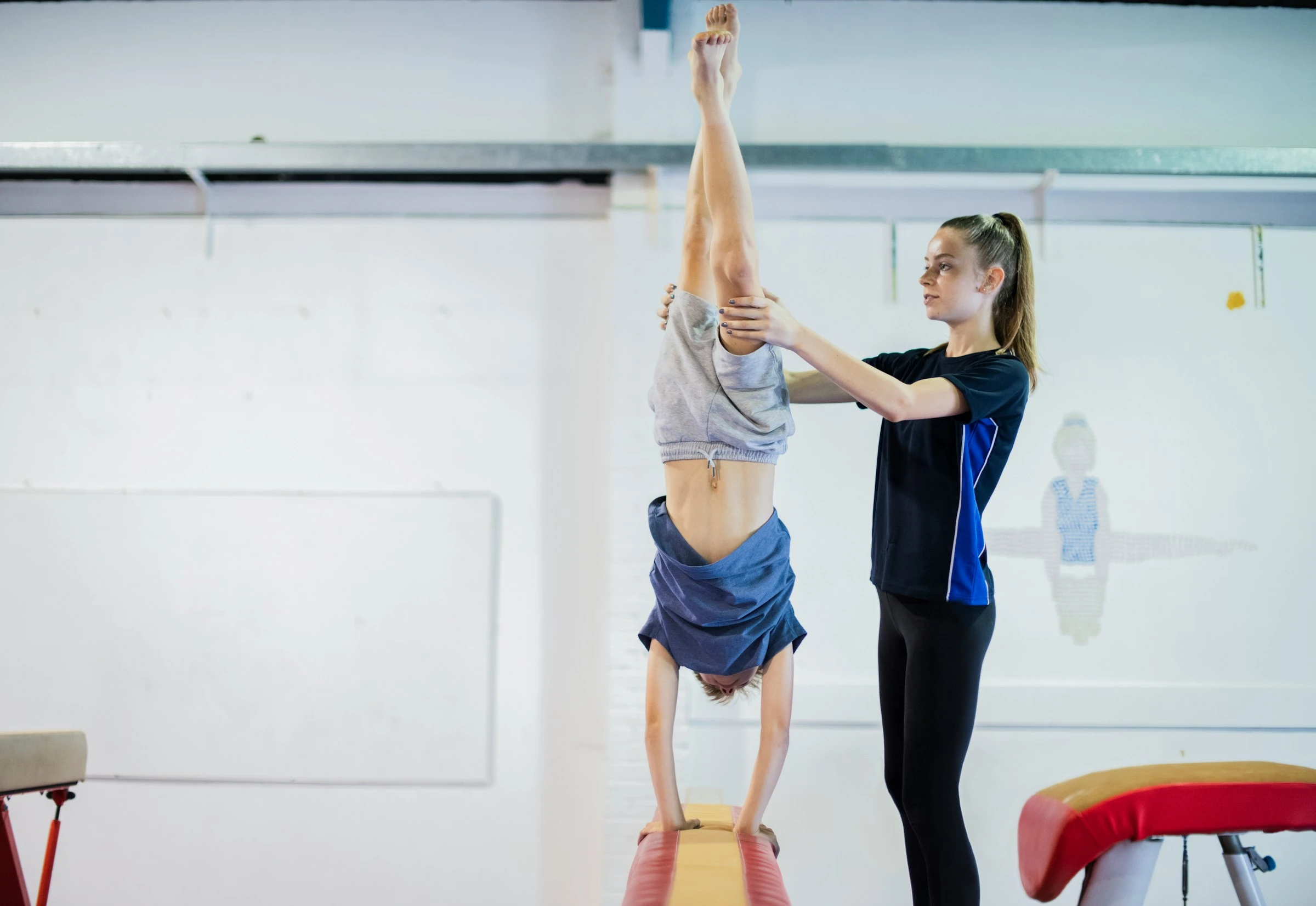
We still hear that football is “masculine” or that gymnastics is “feminine”. In reality, these ideas come from cultural norms far more than from biological differences. It isn't bodies that limit us, but the way they are perceived and trained.
Yes, there are physiological differences between women and men: body composition, hormonal balance (testosterone levels play a major role in muscle development and physical energy cycles), the menstrual cycle, and responses to training load. But the real issue is not comparison, it is better understanding how our bodies work. Even today, most training methods are built on male models and then simply “adjusted” for women.
The result: many female athletes train according to protocols that do not take into account hormonal fluctuations, the menstrual cycle or their effects on recovery, strength, concentration or injury risk. This lack of adaptation does not call women's performance into question, but it limits their full potential.
This lack of information also creates misunderstandings: unexplained fatigue, cyclical drops in performance, or even an unjustified feeling of weakness.
It is therefore essential to raise awareness of these physiological realities among coaches, trainers and athletes. Understanding how the female body works is not about “differentiating to exclude”, but about individualising to perform better.
At AU MENTAL, we support athletes in this holistic approach: a strong mind is also a mind connected to its body and its rhythms. (A full article on the female cycle and physical performance will be published soon to take this essential reflection further.)
Myth no. 5: “The more you train, the better you get.”
Reality: Without recovery, body and mind wear out.
Overtraining weakens the body: muscles no longer regenerate properly, the immune system weakens and the risk of injury increases considerably. Psychologically, over-investment leads to hyperactivation of the nervous system, chronic emotional fatigue and, eventually, a real risk of sporting burnout, often accompanied by loss of enjoyment, disinterest or even depressive symptoms.
Knowing how to rest is therefore a sign of sporting intelligence: progress does not only happen in training, but above all during recovery phases, when the body consolidates physical and mental adaptations. Sleep, relaxation, digital or social disconnection and even moments of apparent emptiness are active components of performance.
Mental recovery is as essential as physical recovery. It reduces cognitive load, regulates emotions and prevents the rumination or over-control that hold back the expression of potential. A rested athlete is clearer, more stable and, above all, better able to mobilise their resources at the right moment.
If your body, technique and strategy are solid, it is your mind, balanced and recharged, that will allow you to exploit them fully and over time.
Champions say it better than anyone :
Great sporting figures often remind us:
- Michael Jordan : “ I can accept failure, everyone fails at something. But I can't accept not trying. ” → Courage and perseverance are worth more than perfection.
- Serena Williams : “ A champion is not defined by their victories, but by their ability to get back up after a defeat.” → Resilience is the real driver of success.
- Usain Bolt : “ I know what I'm capable of, so I never doubt myself. ” → Self-confidence is a silent but formidable weapon.
These phrases are not just slogans: they express a mental philosophy. It is by working on their minds that these champions unlocked their full potential.
Going further with AU MENTAL
The mental side of sport is not reserved for the elite: anyone can train it, whatever their level.
At AU MENTAL, we help athletes, coaches, parents and teams better understand how they work, strengthen their confidence and perform over time.
Want to go further?
Discover our support and our articles on aumental.be to get started if you too want to build a champion's mindset.
Also listen to our latest podcast with Jean-François Lenvain and Lola Mansour, two inspiring voices who talk not only about victories, injuries or defeats, but about everything that happens beyond performance. They discuss a human vision of sport, based on open-mindedness, strong values, commitment and developing social projects. Through their book “Portraits of champions: their lives beyond performance”, they redefine success: it isn't the destination that counts, but the journey.
And to better understand the difference between a psychologist and a coach, read our article here:
Mental coach or psychologist: what are the differences?
Read next