Reading time: 7 min
As the parent of a young athlete, you may already have thought: “They are motivated, they work hard, they want to succeed.” And that's true. But there is a more subtle and often invisible reality: a young person can seem very motivated… while playing under pressure. A quieter pressure: the need to make you proud. And when that shift sets in, enjoyment drops, anxiety rises and motivation becomes fragile. Not necessarily today. But over time.
Case analysis
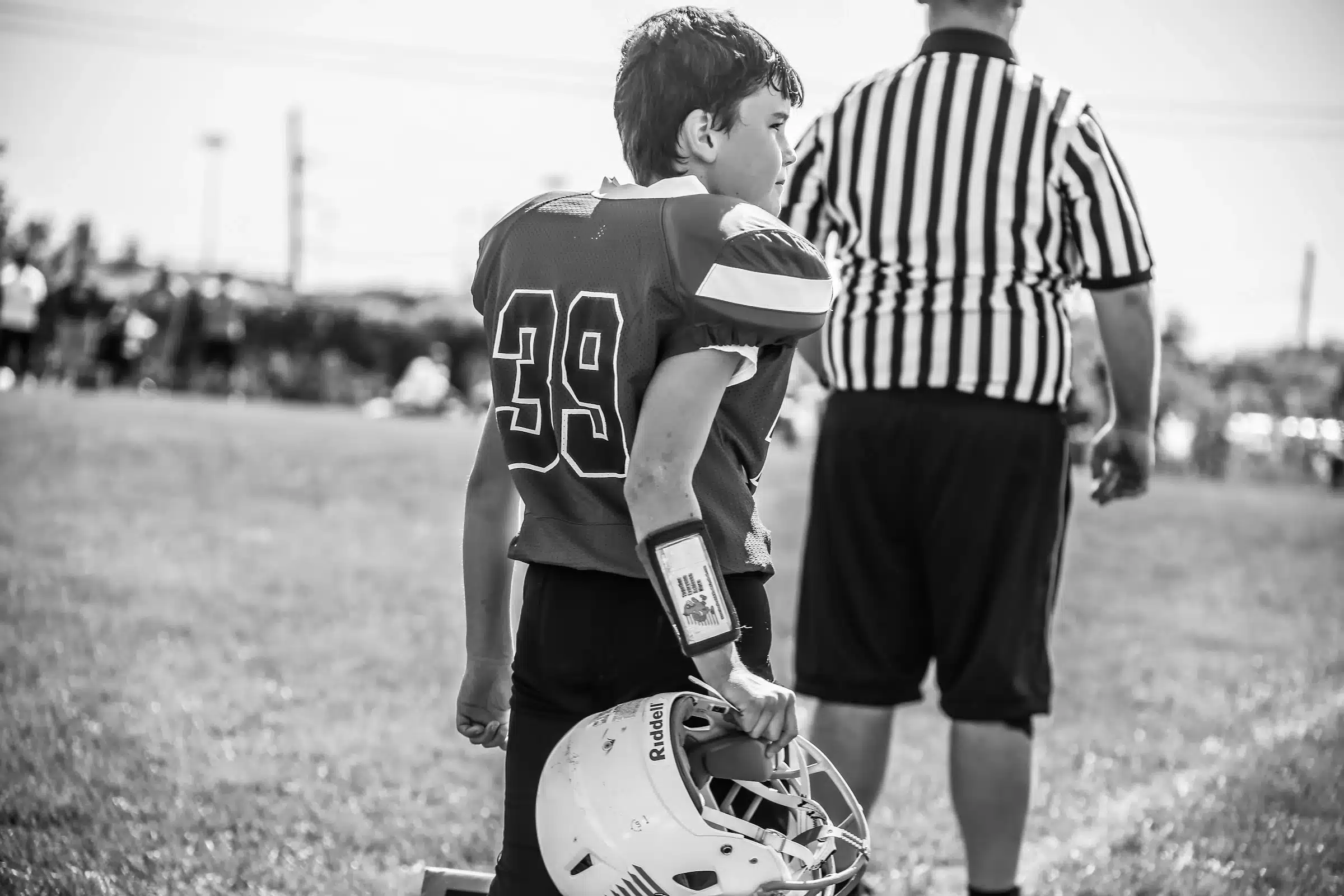
During the match, you are among the parents around the pitch. You cheer, you watch, you just want to “be there”. And yet there is a detail you end up noticing because it keeps happening.
Your child is playing… but looking for you.
After a good pass: they turn their head. A split second.
After a mistake: they turn their head again.
After winning a challenge: the same. Like a reflex.
Even when play continues, even when they should already be back in position… they look at you.
That look is far from trivial. It isn't a tactical look. It is a look asking for something deeper: validation.
And sometimes you can feel it in their game too. They exaggerate a move. They rush. They force a “spectacular” action. They make a decision they wouldn't usually make. As if, beyond the match, they were also playing for something else: your reaction.
Because when an athlete ends up constantly seeking approval, sport changes nature. They are no longer playing just to progress. They are playing to secure a bond, to keep a look on them, to avoid a silence, so as not to “lose” something.
*This case is presented for illustration. It is a fictional situation, built from elements of several situations, and does not reflect any identifiable person or family.
The invisible trap
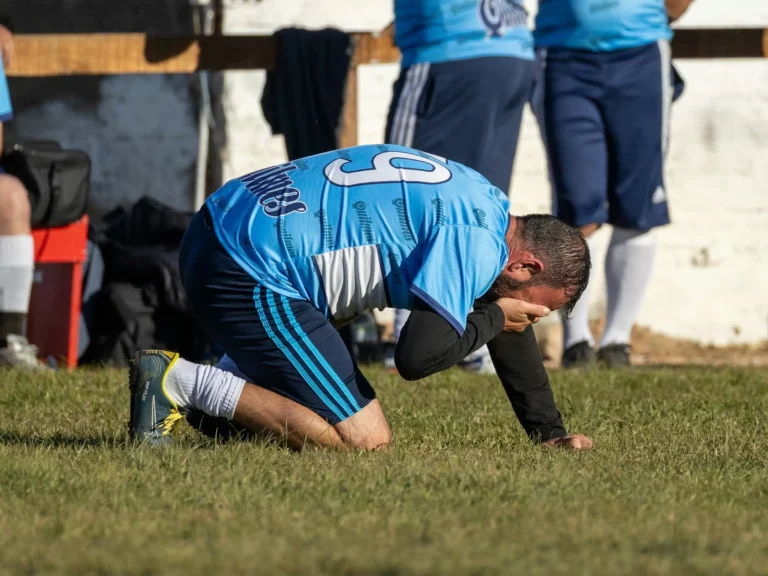
An athlete can be disciplined, serious and demanding… and still play with a knot in their stomach. We often say they work hard, but that isn't the same as “they're doing well”. Why? Because discipline can be driven by two very different engines.
- Motivation that comes from them : your child plays because it means something to them, because they love to progress, because the sport and the dream belong to them. (intrinsic)
- Motivation from outside them : your child plays to avoid disappointing, to be validated, so as not to “lose” your approval, so as not to be “less”. (extrinsic)
This distinction is very well described in self-determination theory (Deci & Ryan, 2000). And it changes everything: external motivation can produce good results in the short term… but it is costly in the long term: tension, fear of mistakes, mental fatigue, loss of enjoyment and potentially injuries due to mental overload.
Why it “works” at first (and why it is dangerous)
Because fear is a powerful driver.
A young person under pressure can train more and demand more of themselves. They can also “keep up appearances” for a while. But add to that the pressure and everything this child has to do outside their sport (school, friends, fatigue, other problems and worries), and it becomes a disaster. Inside, they learn a rule: “I have to measure up… or I'll disappoint.” And when performance drops (it happens to everyone), the mind collapses faster. The athlete ends up getting no enjoyment at all and wants to quit.
Warning signs
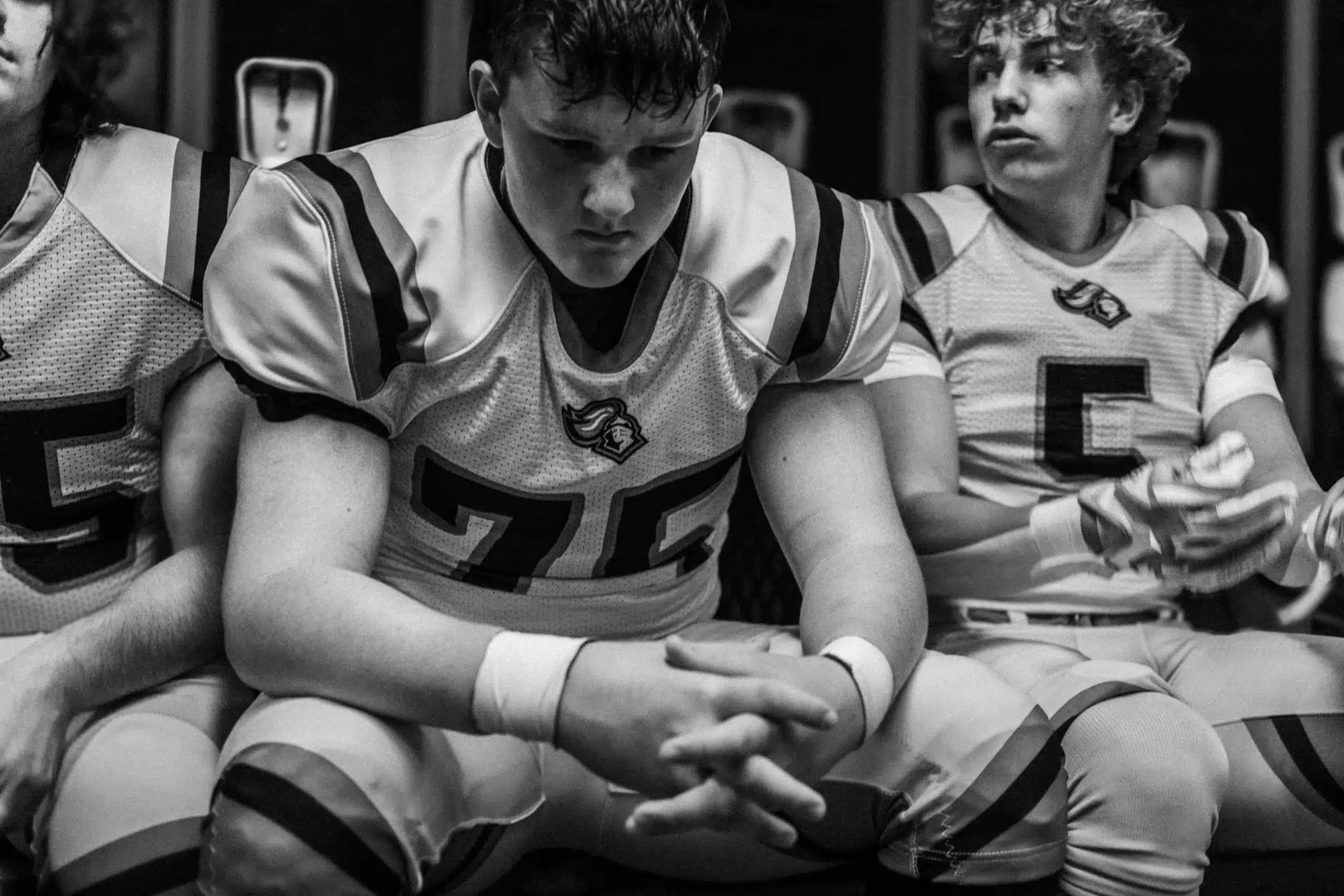
Pressure isn't always visible. You spot it in the details.
On the pitch
- Your child becomes more rigid: they play “safe”, try less, dare less.
- They over-control: hesitate, overthink, lose their instinct.
- Mistakes become huge: one missed action is enough to sink the whole match.
- They seem “strong” but are actually playing with fear.
At home
- Irritability after matches, silence, withdrawal.
- Hypersensitivity to criticism (“you're attacking me”, “you don't understand anything”).
- A need to justify, defend and prove themselves.
- Emotional fatigue: sport = tension, not a breath of fresh air.
This isn't fragility. It is a psychological survival system.
Self-check – motivation or fear of disappointing?
A reflection tool (not a diagnosis). The aim is not to judge, but to identify a feeling and open up an action plan.
Read the statements below and count how many feel true, often:
- After a match, I tend to talk quickly about what went wrong.
- I notice my child shuts down when I talk about their performance.
- I have already said (even kindly): “You can do better / you need to pull yourself together.”
- I feel inner tension when they play (and it may show).
- I'm afraid they will “waste their potential” or “miss out”.
- I sometimes wonder whether their motivation comes from them… or from the fear of disappointing.
Quick read
0–1 : a rather supportive climate → you can consolidate it with a few reference points.
2–3 : grey zone → it often comes down to timing + the type of feedback.
4+ : likely invisible pressure → a clear method can really change the atmosphere.
If you recognise yourself in 2 or more statements, AU MENTAL Academy gives you tools, reference points and a practical method to adjust without feeling guilty.

So now what do we do?
If you recognised some of the signs in this article, the look seeking approval, the fear of mistakes, the invisible tension setting in, the point is not to feel guilty. The point is to take them seriously, because they give valuable information: the engine may be starting to shift. And the earlier we spot them, the easier it is to readjust.
What is important to understand is that there are methods to work on this. Practical, structured methods adapted to real-life sport. And that is exactly why we created AU MENTAL Academy.
Where the article ends… and AU MENTAL Academy begins
For years, in our work with athletes, we have observed the same thing: it isn't a lack of love that damages a journey, it's a lack of reference points at sensitive moments. And above all, parental support is not the same at every stage of a career: at the beginning (initiation), as the athlete grows (development), then as they approach high level or become elite. The role, the stance and the needs evolve, and the family environment must evolve with them.
AU MENTAL Academy was designed for exactly that: helping parents become a steady pillar, able to support at the right level, at the right time, with a clear stance. Our team relies on a multidisciplinary approach: psychologists, sport psychologists, field experts, and also people who know the reality of high-level sport from the inside. The goal is simple: to give you a reliable method to support your child without turning sport into pressure, and to know how to spot what is going on in them… and in you.
What the research says
And this approach is not based on “gut feeling”: it is consistent with what research shows. Where many parents go wrong is thinking that what matters most is their intention. But what really carries weight is the child's perception. Work with young elite athletes shows that parental behaviours perceived as supportive are associated with more autonomous (intrinsic) motivation, and that the child's perception predicts their motivation better than what parents say they do (Marcotte, 2018). A recent thesis points in the same direction: parental autonomy support is associated with athletes' well-being (Lemelin, 2023). And an essential point: aiming for performance does not require more control, quite the opposite. In one reported context, coaches trained in autonomy support won 31% more medals than those who were not (Cheon et al., 2015, cited in Lemelin, 2023).
If you want to go further, AU MENTAL Academy is open. This is where we turn these findings into a method: reference points, guided situations and structured support to help your child reach their full potential.
Registration is open now: join AU MENTAL Academy via this link.
References
Bandura, A. (1997). Self-efficacy: The exercise of control. W. H. Freeman.
Cheon, S. H., Reeve, J., Lee, Y., & Lee, J. (2015). (Study cited in Lemelin, 2023, on autonomy-support training and performance at the Paralympic Games).
Deci, E. L., & Ryan, R. M. (2000). The “what” and “why” of goal pursuits: Human needs and the self-determination of behavior. Psychological Inquiry, 11(4), 227–268.
Lemelin, É. (2023). Doctoral thesis (on interpersonal style, autonomy support and sporting development).
Marcotte, C. (2018). Elite sport in children: motivation and the contribution of parents (Doctorate in psychology, D.Psy.).
Read next