Reading time: 7 min
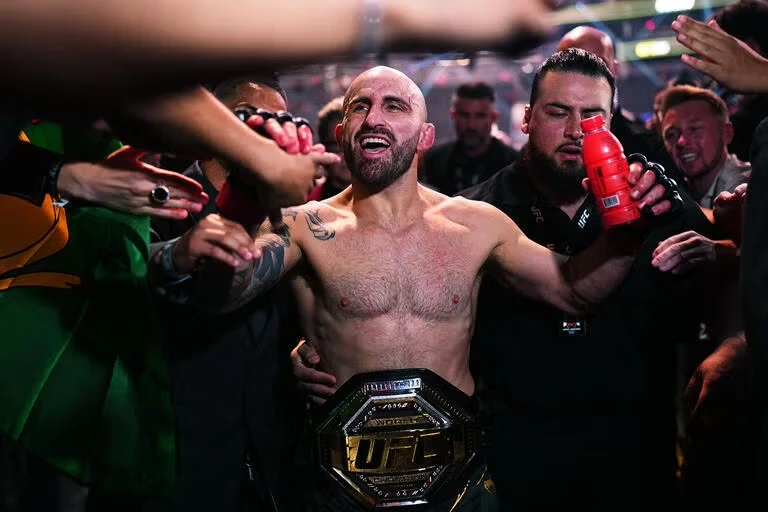
In the merciless arena of high-level sport, few manage to overcome adversity and return to the top after hitting rock bottom. Alexander Volkanovski, former UFC featherweight champion, did just that with a mastery that commands respect. At UFC 314, against all odds, he became the first fighter over 35 to win a title in a division below welterweight, beating Diego Lopes. A historic victory, but above all a lesson in resilience.
Setback as a starting point
First, we need to understand that every exceptional journey is marked by injuries, defeats and self-questioning. In high-level sport, failure is inevitable. What sets champions apart is not their ability to avoid it, but their ability to turn it into a springboard.
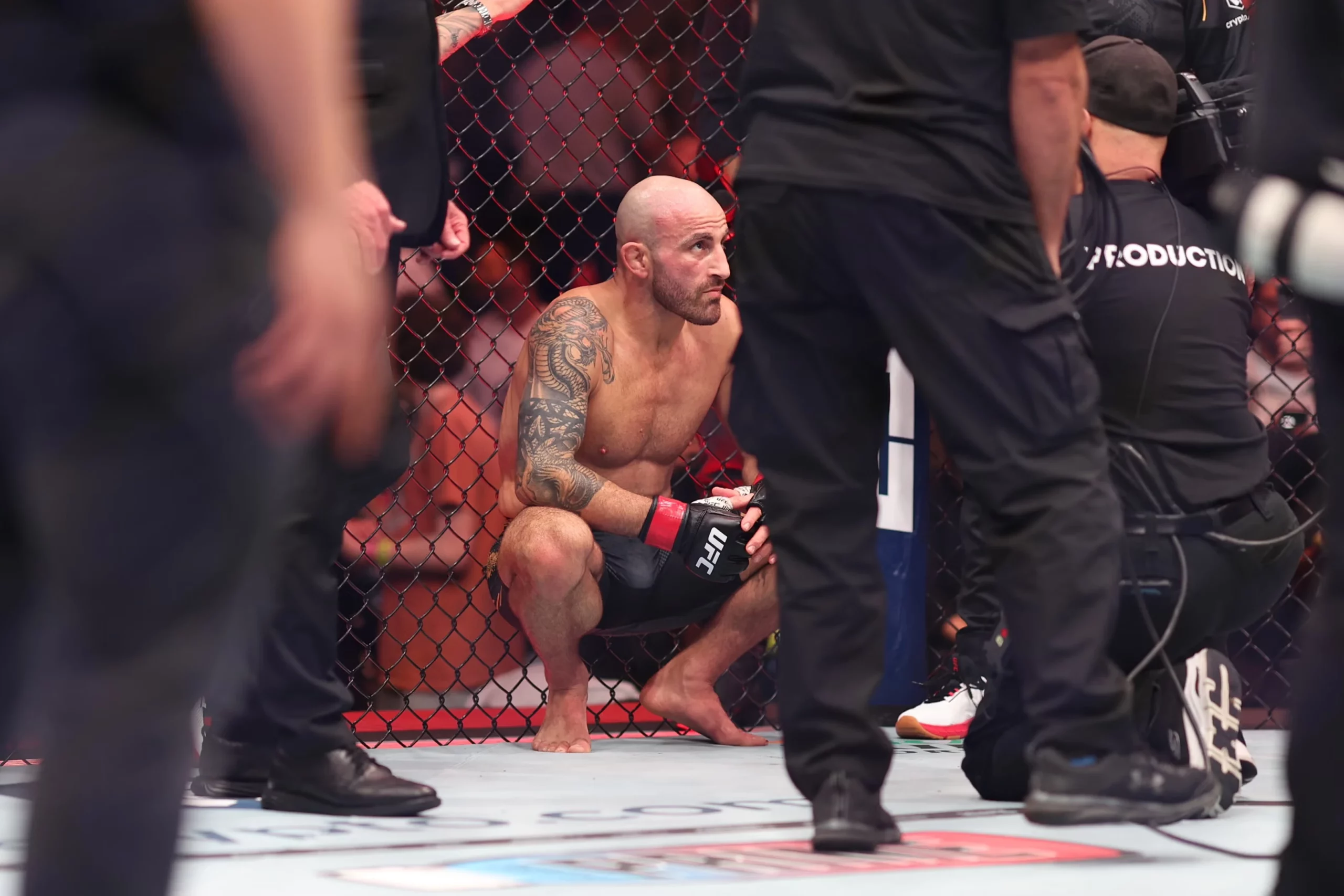
That is exactly what Alexander Volkanovski showed. Before UFC 314, he was coming off two painful defeats, including a KO against Islam Makhachev, which had seriously shaken his image as a dominant athlete. For many, his career seemed to be coming to an end. Yet far from sinking into discouragement, he turned this period of doubt into a lever for transformation.
“ Adversity is an opportunity Adversity is an opportunity”, he said after his victory. This seemingly simple sentence expresses a fundamental principle of sport psychology: how the event is perceived. According to cognitive appraisal theory (Lazarus & Folkman, 1984), it is not so much the event itself that determines its psychological impact, but the way the athlete interprets it.
In psychology, this kind of critical moment is also described as a turning point (Wethington, 2003): an episode of crisis which, if handled well, can initiate profound change. Volkanovski did not see the fall as an end, but as the beginning of a renewal. He used failure as raw material to rebuild himself. In this sense, the setback became the starting point of a new dynamic.
Managing emotions to bounce back better
It is also essential to recognise that any rebuilding starts with emotional work. When an athlete falls, it is not only their record that is at stake, but also their identity, their self-image and sometimes even their psychological balance.
In this respect, Volkanovski showed great maturity. Unlike many athletes who prefer to hide their weaknesses, he spoke publicly about his mental difficulties. This shows high emotional intelligence – the ability to recognise, understand and regulate your emotions (Goleman, 2006).
Accepting your emotions is a prerequisite for transforming them. Rather than denying his fears or frustration, Volkanovski chose to face them. He put in place emotional management strategies such as conscious breathing, meditation and calming mental routines. In other words, he managed to make his emotions an ally, not an obstacle.
Adversity is an opportunity.
Alexander volkanovski
Reframing failure: from hurt to growth
One of the most powerful elements in the resilience process lies in the ability to reframe failure. Where many collapse in the face of adversity, Volkanovski chose to read a message in it.
According to the theory of post-traumatic growth (Tedeschi & Calhoun, 1996), some individuals faced with difficult events manage not only to recover but also to come out of them positively transformed. This involves re-reading the experience, redefining oneself and refocusing on what matters.
With this in mind, Volkanovski did not see his defeats as verdicts. On the contrary, he interpreted them as revealing: revealing his limits, the habits he needed to change, the preparation he needed to adjust. Thanks to this constructive reading of failure, he was able to lay the foundations for a stronger, clearer comeback, more aligned with his deepest values.
Training the mind like a muscle
It therefore becomes clear that mental preparation is just as crucial as physical preparation. Too often, the mind is seen as a secondary variable, an “extra” for champions. Yet at the very highest level, it is the mind that makes the difference.
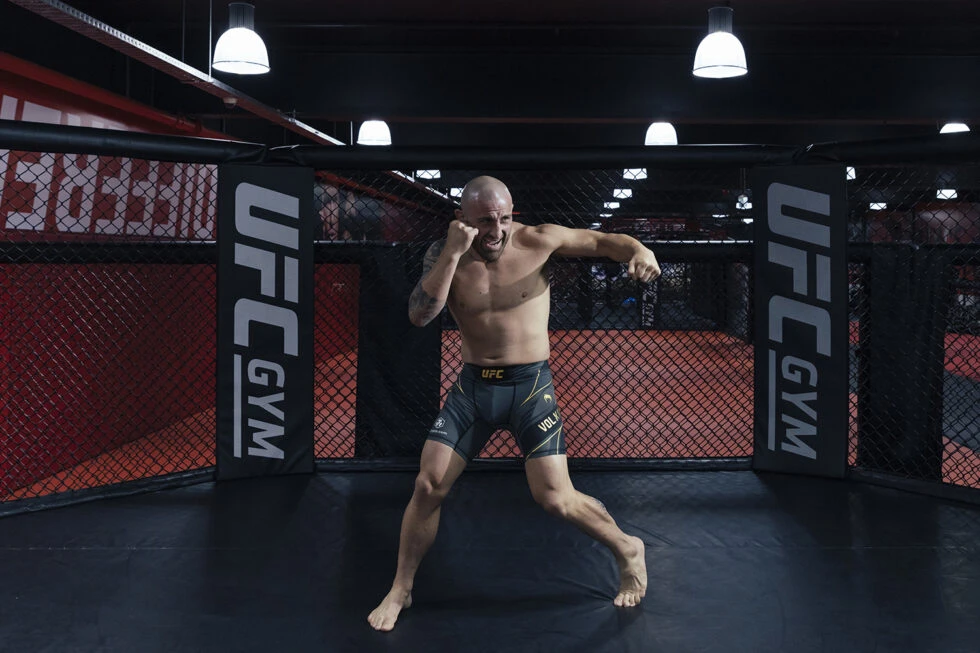
Volkanovski fully embraced this reality. He didn't just build up his cardio or sharpen his technique: he trained his mind. Visualisation, autosuggestion, guided mental preparation, analysis of limiting thoughts… Every tool was used as a way to sculpt a winner's psychology.
Research in sport psychology confirms it: athletes who integrate structured mental routines are not only more resilient, but also perform better under pressure (Weinberg & Gould, 2019). In other words, the mind is not a luxury, but an essential condition for lasting performance.
Support, a pillar of performance
At the same time, we must stress the importance of the support network. No athlete succeeds alone. Behind every individual achievement there is a discreet but essential team. Volkanovski has never denied this: he regularly highlights the role of his team, his loved ones and his mentors.
From a psychological point of view, perceived support (Sarason, 1983) acts as a protective buffer against stress. It allows the athlete to feel surrounded, listened to and backed. It strengthens confidence and reduces the emotional impact of failures.
By relying on a stable, caring environment, Volkanovski was able to weather his storms with more clarity and strength. Because surrounding yourself with others isn't showing weakness: it is recognising that you go further together than alone.
Read also: Mental coaching
Turning pressure into a driving force
Finally, one of the most remarkable aspects of Volkanovski's victory at UFC 314 is his ability to channel pressure. Coming back after two KOs, in front of a sceptical public, in a title fight, could have crushed him. But he made it a lever.
Pressure is often seen as an enemy. Yet it can become a vehicle for performance, provided it is well managed. This mastery relies on rigorous mental training, but also on the ability to enter what Mihály Csíkszentmihályi calls the flow state – that moment of total immersion when the athlete acts with ease, instinct and clarity.
So rather than enduring outside scrutiny, Volkanovski used it as a source of energy, as a catalyst for his concentration. He didn't run from what was at stake: he embraced it, to the point of turning it into a strength.
What Volkanovski teaches us about ourselves
More broadly, Volkanovski's story takes us back to ourselves. It reminds us that vulnerability can coexist with power, that a fall is never final, and that we can redefine ourselves at any time.
Beyond the UFC, it is a universal lesson. Whether you are an athlete, an entrepreneur, an artist or a student: resilience is a skill anyone can develop. What Volkanovski teaches us is that it isn't just about holding on, but about turning trials into revelations of potential.
That is precisely the mission we pursue at Au Mental : supporting athletes and individuals in this search for meaning, clarity and inner transformation. Because the mind shouldn't be a brake, but a foundation.
Conclusion: failure as a springboard
Ultimately, Volkanovski offers us much more than a sporting victory: he gives us a life lesson. He shows us that falling isn't a tragedy, but a stage. That suffering isn't weakness, but an invitation. That stepping back sometimes gives you the momentum to leap further.
If you are going through a difficult time, remember: failure isn't an end, but a different beginning. And if you want to learn to use it as a lever for progress, we are here to support you.
At AU MENTAL, we believe in your ability to grow, bounce back and rise to the top. A strong mind isn't born from ease, but from adversity.
References
Goleman, D. (2006). Emotional intelligence : Why It Can Matter More Than IQ. Bantam.
Lazarus, R. S., PhD, & Folkman, S., PhD. (1984). Stress, Appraisal, and Coping. Springer Publishing Company.
Sarason, I. G., Levine, H. M., Basham, R. B., & Sarason, B. R. (1983). Assessing social support : The Social Support Questionnaire. Journal Of Personality And Social Psychology, 44(1), 127‑139. https://doi.org/10.1037/0022-3514.44.1.127
Tedeschi, R. G., & Calhoun, L. G. (1996). The posttraumatic growth inventory : Measuring the positive legacy of trauma. Journal Of Traumatic Stress, 9(3), 455‑471. https://doi.org/10.1002/jts.2490090305
Weinberg, R. S., & Gould, D. (2019). Foundations of Sport and Exercise Psychology, 7E. Human Kinetics.
Wethington, E. (2003). Turning points as opportunities for psychological growth. In American Psychological Association eBooks (p. 37‑53). https://doi.org/10.1037/10594-002
Read next